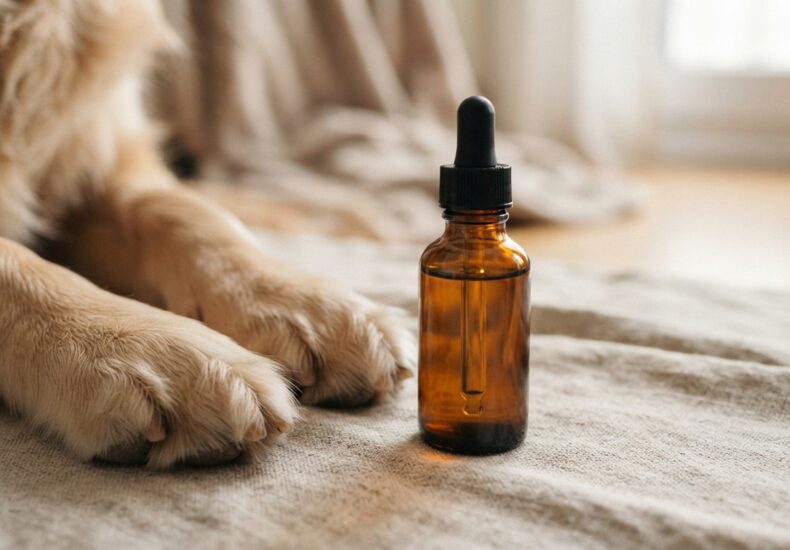
CBD Oil for Dogs: Quality Factors to Consider
A bottle of hemp-derived oil can look simple, but the information behind the label may be much more complicated. Concentration, ingredients, testing, extraction methods, storage, and manufacturing practices can all affect how a product should be evaluated before it is given to a dog.
Interest in Holistapet CBD Oil for Dogs has grown alongside broader consumer interest in hemp-derived products. Yet product quality remains a practical concern because commercial formulations can differ considerably. The U.S. Food and Drug Administration has stated that it has not approved cannabis for use in animals and has raised concerns about the safety, quality, and labeling of unapproved cannabis-derived products marketed for pets.
Start With the Product Label
A reliable evaluation begins with basic label information. A product should clearly identify the amount of CBD present rather than relying only on general terms such as hemp extract or hemp oil.
The total amount of liquid also needs to be considered. For example, a 30 mL bottle containing 600 mg of CBD has a different concentration from a 30 mL bottle containing 150 mg. Both containers have the same volume, but the amount of CBD delivered per milliliter is substantially different.
Information worth checking
A useful label should make several details easy to find:
- Total CBD in the container
- Total liquid volume
- Amount of CBD per serving
- Full ingredient list
- Recommended animal species
- Manufacturer or responsible business information
- Lot or batch identification
- Storage instructions
- Testing information, where available
Labels that leave out basic concentration information make it harder to determine how much CBD is actually being administered. This becomes especially relevant when products are compared across different brands or formulations.
CBD content versus hemp content
“Hemp oil” and “CBD” do not necessarily describe the same thing. Hemp seed oil, for example, is produced from hemp seeds and naturally contains fatty acids, but it is not equivalent to a concentrated cannabidiol extract.
A product can also contain a broader hemp extract that includes CBD alongside other naturally occurring compounds. The exact cannabinoid profile should therefore be checked rather than inferred from the word hemp alone.
Why Third-Party Testing Matters
Laboratory testing can provide information that a front label cannot. A certificate of analysis, often called a COA, may show measured cannabinoid concentrations and screening results for certain contaminants.
The value of a COA depends on whether it can be connected to the specific product batch. A generic laboratory document without a matching batch number provides less useful information than a report that clearly identifies the tested product.
Useful details in a certificate of analysis
A laboratory report may include:
- CBD concentration
- THC concentration
- Other detected cannabinoids
- Heavy-metal screening
- Microbial testing
- Pesticide screening
- Residual-solvent testing
- Batch or lot number
- Laboratory identification
- Testing date
Not every laboratory report contains all of these categories. The exact testing panel depends on the laboratory and product.
A clear report should also use understandable units. Results expressed in mg/g, mg/mL, or percentage should be interpreted according to the product’s format.
Matching the report to the bottle
The batch number is one of the easiest details to overlook.
Suppose a bottle carries batch number A123 while the available laboratory report identifies batch A117. The report may still describe a product from the same manufacturer, but it does not establish that the bottle in hand was the batch that underwent that particular analysis.
For consumers comparing products, this distinction helps separate current batch information from general company claims.
Understanding Ingredients Beyond CBD
CBD is only one part of many oil-based formulations. Carrier oils are commonly used to dissolve or distribute cannabinoids and can influence the texture, flavor, and administration method.
Common carrier ingredients may include coconut-derived oils, olive oil, hemp seed oil, or other edible oils. Additional ingredients may also appear in flavored products or formulas designed for specific administration methods.
A dog with dietary sensitivities may require closer attention to the complete ingredient list.
Questions to ask about additional ingredients
Before using a product, check whether the formula contains:
- Flavoring agents
- Sweeteners
- Essential oils
- Artificial additives
- Preservatives
- Additional herbal extracts
- Other cannabinoids
- Ingredients known to cause problems for dogs
Some ingredients that are acceptable for humans are inappropriate for dogs. Xylitol is a well-established example. The American Society for the Prevention of Cruelty to Animals identifies xylitol as toxic to dogs and notes that ingestion can cause serious effects, including low blood sugar and liver injury.
A product should therefore be evaluated as a complete formula rather than based solely on its CBD concentration.
Extraction and Processing Information
Cannabinoids can be extracted from plant material through different processes. Consumers may encounter descriptions involving ethanol extraction, carbon dioxide extraction, or other methods.
The extraction method alone does not establish that one product is automatically safer or more effective than another. Processing conditions, purification, formulation, testing, and manufacturing controls also affect the finished product.
Carbon dioxide extraction is frequently discussed in hemp-product manufacturing because it can be used to extract compounds from plant material without leaving the same type of solvent residue associated with some extraction methods. Still, a manufacturing claim should be considered alongside laboratory testing rather than treated as proof of quality by itself.
Full-spectrum, broad-spectrum, and isolate
Product descriptions often use three terms:
Full-spectrum generally refers to an extract containing multiple naturally occurring hemp compounds, including cannabinoids and other plant constituents. Depending on the product and applicable regulations, small amounts of THC may also be present.
Broad-spectrum generally refers to a multi-compound hemp extract from which THC has been removed or reduced to a specified level.
CBD isolate refers to a preparation consisting primarily of purified cannabidiol.
These categories describe composition. They do not independently prove effectiveness, safety, or suitability for a particular dog.
Concentration Should Be Easy to Calculate
A quality product should provide enough information for the amount of CBD per measured volume to be determined.
For example:
600 mg CBD ÷ 30 mL oil = 20 mg CBD per mL
If a measuring device delivers 0.5 mL, that volume would contain approximately 10 mg of CBD under the assumption that the oil is uniformly mixed.
This calculation becomes difficult when the label only says “hemp extract” without providing the amount of CBD. A product with a clearly stated cannabinoid concentration is easier to compare and monitor.
Why counting drops can cause confusion
Dropper bottles are convenient, but individual drops are not always identical in volume. The size can vary according to the dropper design, liquid characteristics, angle, and dispensing technique.
A calibrated measuring device can provide a more consistent volume than simply counting drops. If a manufacturer provides a marked dropper, the markings should be followed rather than estimating the amount visually.
Look at Storage Instructions
CBD-containing oils can be affected by environmental conditions. Heat, light, and prolonged exposure to air may contribute to changes in some plant-derived compounds and carrier oils.
Storage instructions should therefore be followed carefully.
A typical storage review includes:
- Keep the cap tightly closed.
- Store the product according to the manufacturer’s temperature guidance.
- Avoid prolonged direct sunlight.
- Keep the bottle away from children and pets.
- Check the expiration or best-by date.
- Avoid using a product whose appearance or odor has changed substantially.
A cool, dark storage location may be appropriate for some formulations, but the manufacturer’s instructions should take priority because different products can have different stability requirements.
Product Quality and Veterinary Research
Research on canine CBD has increased, although the number of studies remains relatively small compared with research involving conventional veterinary medicines.
A 2023 review of published canine CBD studies found research involving conditions such as osteoarthritis and epilepsy, while also identifying limitations in the available evidence. Differences in dosage, product formulation, study design, and sample size make direct comparisons difficult.
One randomized study involving healthy Beagles examined repeated oral administration of several CBD doses over 28 days. The researchers reported that the treatment was generally tolerated during the study, while higher exposure was associated with more gastrointestinal adverse events and increased alkaline phosphatase activity.
These findings demonstrate why product quality and dosage cannot be considered separately. A research result involving one defined formulation cannot automatically be transferred to every commercial CBD product.
Red Flags on Pet CBD Products
A product deserves closer scrutiny when important information is missing or difficult to verify.
Potential warning signs include:
- No stated CBD concentration
- No complete ingredient list
- No batch information
- Laboratory results that cannot be matched to the product
- Unusually broad medical claims
- No clear directions for animal use
- Human-only labeling presented as suitable for pets
- Unclear manufacturer information
- Claims that suggest CBD can replace veterinary treatment
Medical claims deserve particular caution. The FDA has warned that companies marketing unapproved CBD products for animals cannot legally make unsupported claims that their products diagnose, cure, mitigate, treat, or prevent disease.
A product claiming to treat numerous unrelated diseases should therefore be evaluated carefully, especially when the claims are not supported by identifiable clinical research.
Questions to Consider Before Purchase
A short checklist can make product comparisons easier.
Product checklist
- Is the total CBD amount clearly stated?
- Is the bottle volume provided?
- Can CBD per milliliter be calculated?
- Is the complete ingredient list available?
- Does the product identify the intended animal species?
- Is batch-specific laboratory testing available?
- Does the testing identify CBD and THC levels?
- Are storage instructions provided?
- Is there clear manufacturer information?
- Are medical claims presented responsibly?
No single label feature guarantees that a product is appropriate for a particular dog. These checks simply provide a more structured way to assess the information available before a purchase or veterinary discussion.
CBD Products and Veterinary Oversight
A veterinarian can evaluate whether a cannabinoid product is appropriate in the context of a dog’s overall health. This becomes especially relevant when the animal has liver abnormalities, chronic disease, a history of seizures, or takes prescription medications.
CBD may affect how certain substances are processed by the body, and research continues to examine these interactions. A complete list of medications, supplements, and health conditions gives a veterinarian more useful information than a CBD product name alone.
Veterinary guidance also helps prevent delayed treatment. A dog showing persistent pain, seizures, vomiting, appetite loss, weakness, or other concerning symptoms may need diagnostic testing rather than reliance on a supplement.
Final Thoughts
Evaluating CBD products for dogs requires attention to concentration, ingredients, laboratory testing, manufacturing information, and realistic health claims. A clearly labeled, appropriately tested product is easier to assess, but veterinary guidance remains important because CBD products for animals are not universally approved or standardized.